
 Norsk bokmål
 Русский
Gifts with a Story: Artisan Products That Preserve Traditions

The quiet luxury of meaning
In a world overflowing with objects, the most memorable gifts are no longer those wrapped in gold foil — but those that carry a story.
They remind us of people, places, and craftsmanship that cannot be replicated. In Scandinavia, where minimalism meets deep cultural roots, artisan gifts are not about possession — they are about connection. Each handmade object holds a fragment of heritage, a whisper of time, and the calm rhythm of human hands.
1. The northern art of giving
Gift-giving in Scandinavia has always been subtle, intimate, and thoughtful. It’s not about abundance — it’s about essence.
A small piece of wool from a local sheep farm, a carved wooden bowl passed through generations, or a bottle of birch-infused liqueur from a northern distillery — all of these tell more than words could.
In Norway, the tradition of gave med mening — a gift with meaning — reflects the belief that value lies in authenticity. A handmade ceramic cup from a local artisan can become a ritual companion in the long winter months, turning every morning coffee into a quiet ceremony.
These are not just items. They are stories.

2. Heritage in the details: when craftsmanship becomes memory
Every region in Scandinavia hides its own craft traditions — often rooted in landscapes themselves.
In the fjord villages of Western Norway, artisans still weave wool using 19th-century looms, creating patterns that echo ancient Norse motifs. In Lapland, Sami craftspeople (duodji) hand-make reindeer leather pouches decorated with traditional geometric designs — practical, symbolic, and timeless.
Each piece carries both skill and heritage. The color of a thread, the choice of wood, or the engraving on silver are not random — they are a language of belonging.
When you choose an artisan gift, you are not only supporting local makers but also becoming part of a cultural continuum that has lasted for centuries.



3. Aesthetics of sustainability
Luxury today speaks softly.
For the Scandinavian elite, status is increasingly defined not by logos, but by awareness — where something was made, how, and by whom. A handwoven linen tablecloth or a beeswax candle from an Oslo atelier may seem simple, but they embody a kind of slow luxury — the opposite of mass consumption.
Sustainable gifting means:
- Choosing natural, renewable materials like wool, clay, wood, or linen
- Supporting small-scale local production instead of global chains
- Valuing durability over novelty
- Reducing packaging and reusing it creatively — for example, wrapping gifts in linen napkins or old maps of the fjords
Such choices reflect an evolved aesthetic — where less truly means more.
Every artisan has a story — and that is what transforms a product into an experience.
Consider the Oslo-based perfumer who distills scents inspired by pine forests and cold sea wind. Or the glassblower from the island of Bornholm who works with recycled sea glass, turning marine debris into delicate tableware.
These creations do not shout; they whisper. They invite curiosity and conversation — where did this come from? who made it? what inspired it?
Platforms like NordCeremony bring together such makers across the Nordic region — people who create with conscience and soul, allowing their work to bridge nature, heritage, and human touch.

Home Spa Rituals


Wooden Craft Decor


Wooden Craft Decor


Wooden Craft Decor


Wooden Craft Decor
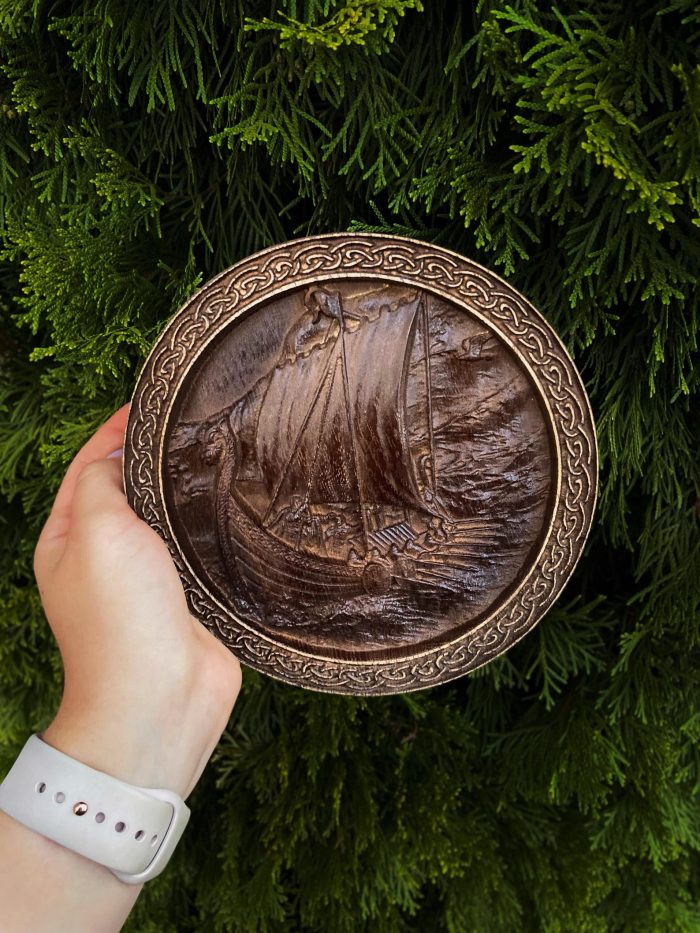

Wooden Craft Decor


Wooden Craft Decor


5. The gift of time and atmosphere
An artisan gift is never just a thing — it’s an experience.
Imagine an intimate winter dinner by candlelight, the table set with handcrafted ceramics and linen napkins dyed with natural pigments. A pot of fish soup gently steams on the stove; outside, snow falls softly over the fjord. In such a moment, every object becomes part of the atmosphere — meaningful, rooted, serene.
Giving such a gift means offering a fragment of this atmosphere to someone else: the peace of slow living, the tactile pleasure of craftsmanship, the quiet joy of nature brought indoors.
6. From local to legacy
The beauty of artisan traditions lies in their continuity. What begins as a local workshop can become part of a family’s story — a handwoven blanket gifted at a wedding, a carved wooden ornament passed from one generation to the next.
Scandinavian culture values longevity — not only in design but in emotional memory. The things we choose to keep and give shape our shared legacy.
By choosing handmade, meaningful gifts, we participate in preserving this legacy. We tell future generations that beauty matters — especially when it is born from patience, respect, and connection to the land.
A closing reflection
True luxury is never mass-produced.
It lives in the quiet details — in the grain of wood, the weight of wool, the imperfect edge of hand-shaped clay.
To give such a piece is to honor both the maker and the receiver.
Artisan gifts remind us that culture is not something we visit — it’s something we live.
And in the north, where nature defines rhythm and silence carries weight, giving with a story is the most elegant gesture of all.
If you enjoyed exploring the world of meaningful gifts and craftsmanship, you may also like our feature “How to Organise an All-Inclusive Event in Scandinavia” — a guide to creating gatherings that combine elegance, inclusivity, and Nordic simplicity.
Recommended Reads
How to Get from Oslo Airport to the City Center by Taxi
March 5, 2026Most international visitors to Norway arrive at Oslo Airport Gardermoen, located about 50 kilometers north of the capital. If comfort, privacy, and direct transportation are your priorities, taking a taxi is the most flexible way to reach central Oslo. Unlike buses or trains, a taxi provides a direct door-to-door journey to your hotel or private…
Read moreHow to Get from Oslo Airport to the City Center by Bus (Flybussen)
March 5, 2026Most international visitors to Norway arrive at Oslo Airport Gardermoen, located about 50 kilometers north of the capital. If you prefer not to take the train, the airport express bus operated by Flybussen offers a convenient and well-organized alternative. Unlike the train, which arrives only at Oslo Central Station, Flybussen makes multiple stops across central…
Read moreHow to Get from Oslo Airport to the City Center by Train (Flytoget)
March 5, 2026Most international visitors to Norway arrive at Oslo Airport Gardermoen, located about 50 kilometers north of the capital. If your priority is reaching central Oslo quickly and without complications, the most efficient option is the airport express train operated by Flytoget. Unlike regional trains, Flytoget is designed specifically for airport transfers. It connects the terminal…
Read moreNorway’s Best Michelin-Level Food Journeys
December 1, 2025Exploring Nordic cuisine through curated tasting routes There are countries where food is simply nourishment — and there are places where food becomes a story.Norway belongs to the second category. Here, every ingredient carries memory: of ancient glaciers, of slow northern light, of communities that learned to live in harmony with harsh landscapes. In Norway,…
Read moreWinter Hiking in Lofoten Nature, Silence, and Adventure
November 30, 2025Where Silence Becomes the Landscape There’s a certain moment, standing on a snow-covered ridge above the Arctic Ocean, when all sound seems to vanish — no wind, no footsteps, no echo. Just stillness, vast and luminous. That is Lofoten in winter. Far from the summer crowds, these islands transform into a realm of muted blues…
Read moreChristmas in Bergen Magical Seaside Experiences
November 29, 2025Discover how Bergen celebrates Christmas with lights, music, and traditional fairs. Where the Sea Meets the Season The first snow rarely settles for long in Bergen. It melts almost as soon as it touches the cobblestones, leaving behind a soft sheen that mirrors the glow of the harbor lights. Yet somehow, Christmas here feels more…
Read more